THE C64
1982 · 64KB · one megahertz · seventeen million sold
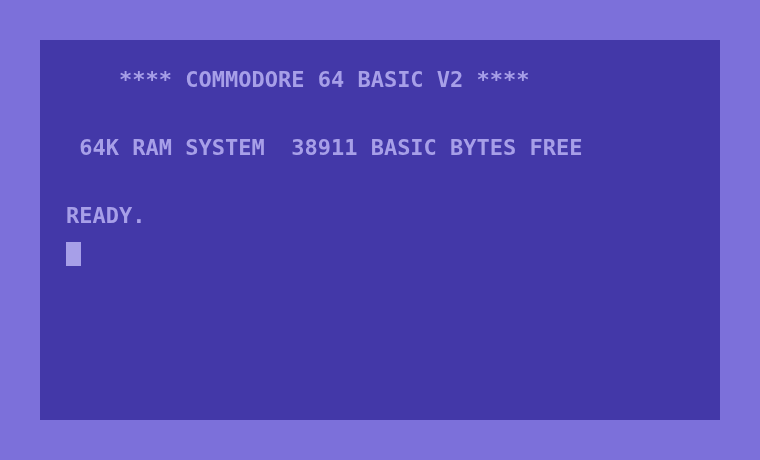
When you switched on a Commodore 64, this is what greeted you: a blue screen, a light-blue border, and a blinking cursor waiting for a command. 38911 BASIC BYTES FREE - that was your canvas. No operating system to boot, no updates, no waiting. On in one second, ready to program.
The machine
Released in August 1982 for $595, the C64 went on to become the best-selling single computer model of all time - somewhere between 12.5 and 17 million units. For a decade it was the machine in the bedroom, the one a generation learned to code on and, more importantly, learned to play on.
| Spec | The reality of 1982 |
|---|---|
| CPU | MOS 6510 at ~1 MHz |
| RAM | 64 kilobytes (hence the name) |
| Graphics | VIC-II - 320×200, 16 colours, hardware sprites |
| Sound | SID 6581 - 3 voices, the chip that launched a genre of music |
| Storage | Cassette tape (slow) or 5.25" floppy (less slow) |
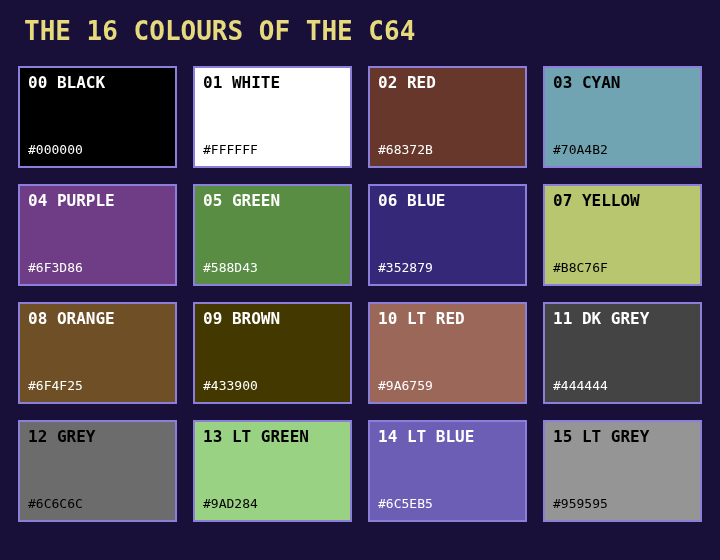
| Colours | The 16 you see below - and no more |
Sixteen colours, forever
Every C64 game, every loading screen, every demo was painted from exactly these sixteen colours. Retro-64 uses the same palette by index - when the engine says C64.LIGHT_BLUE, it means colour 14, the same one that framed the boot screen.
The wait was part of it
Loading a game from cassette took minutes, and the screen filled with these hypnotic bands of colour while it worked - the data itself, made visible. A whole generation's Pavlovian anticipation lives in this image.

Why it still matters
The C64's limits were its art. Sixteen colours forced clarity. One megahertz forced clever code. 64KB forced designers to make every byte count - Elite fit an entire galaxy into less memory than a single modern emoji. The games that came out the other side didn't feel good by accident; they were tuned frame by frame by people who understood the machine completely.
That's the whole reason Retro-64 exists: to recreate not just how those games looked, but how they felt - the committed jumps, the momentum, the honest difficulty - in code you can read.